Weekly Free Inquiry Blog Post #2: Esquimalt Lagoon
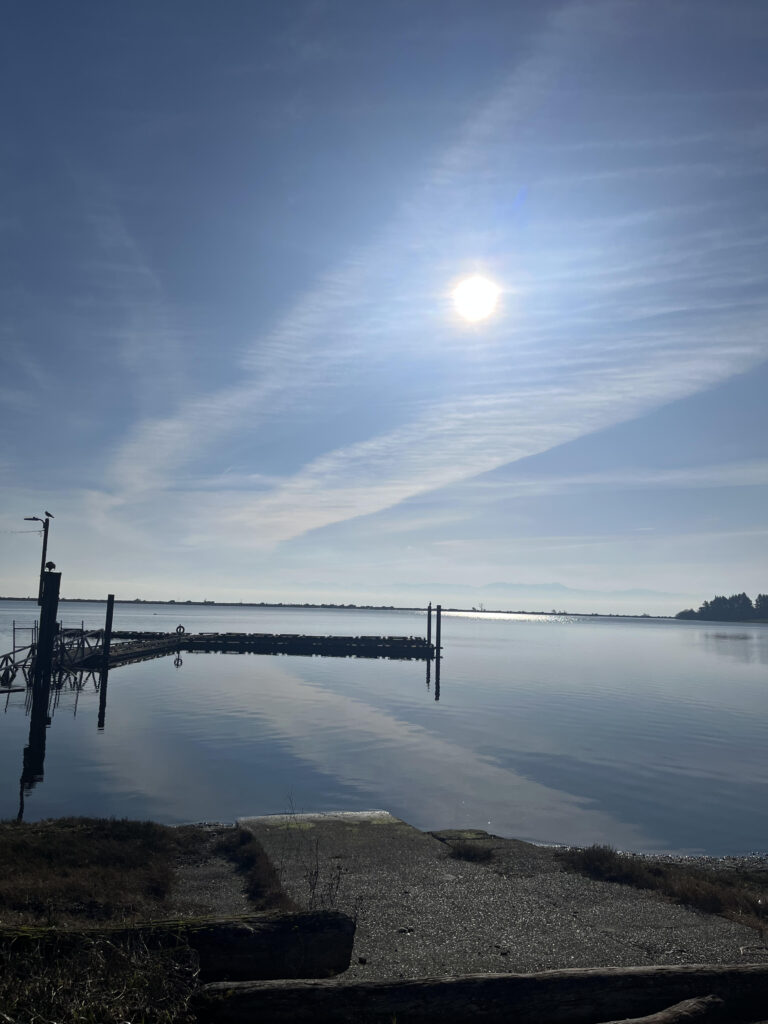
For my second weekly inquiry project I visited the Esquimalt Lagoon, located in Colwood, B.C. My reason for visiting and selecting this location is due to it being one of my favourite local locations to visit. As well, it is important to note that it is located very close to my first location that I focused my first blog post on, Royal Roads University. There are two accessible sites to the lagoon, one from a road that drives along the lagoon, or the access seen from my photo above which is accessible from RRU.
I have attached a video below for those to enjoy who may want to visit the Esquimalt Lagoon but may not be able to see in person:
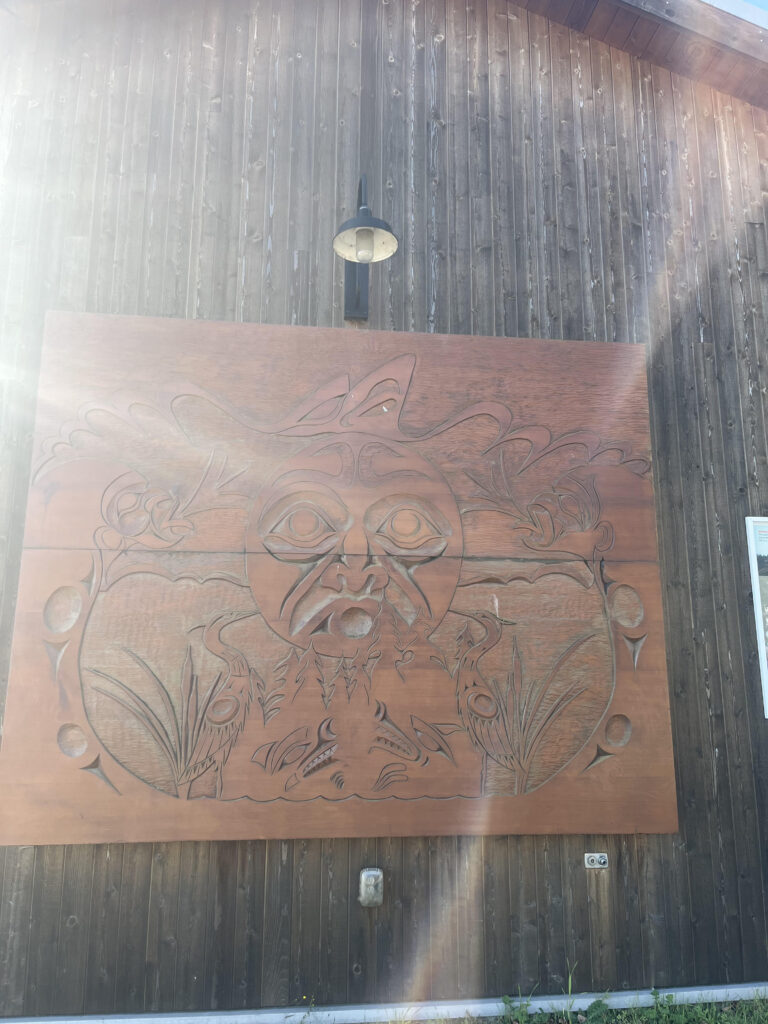
The history of the Esquimalt Lagoon from an Indigenous standpoint consists of the Esquimalt and Songhees First Nations using the area as a source of food, shelter, and spiritual practices (CRD, 2026). Other activities conducted in these region consisted of harvesting clams and other resources (CRD, 2026).
Attached are a couple photos that I took at Esquimalt Lagoon on it’s Indigenous and settler history:
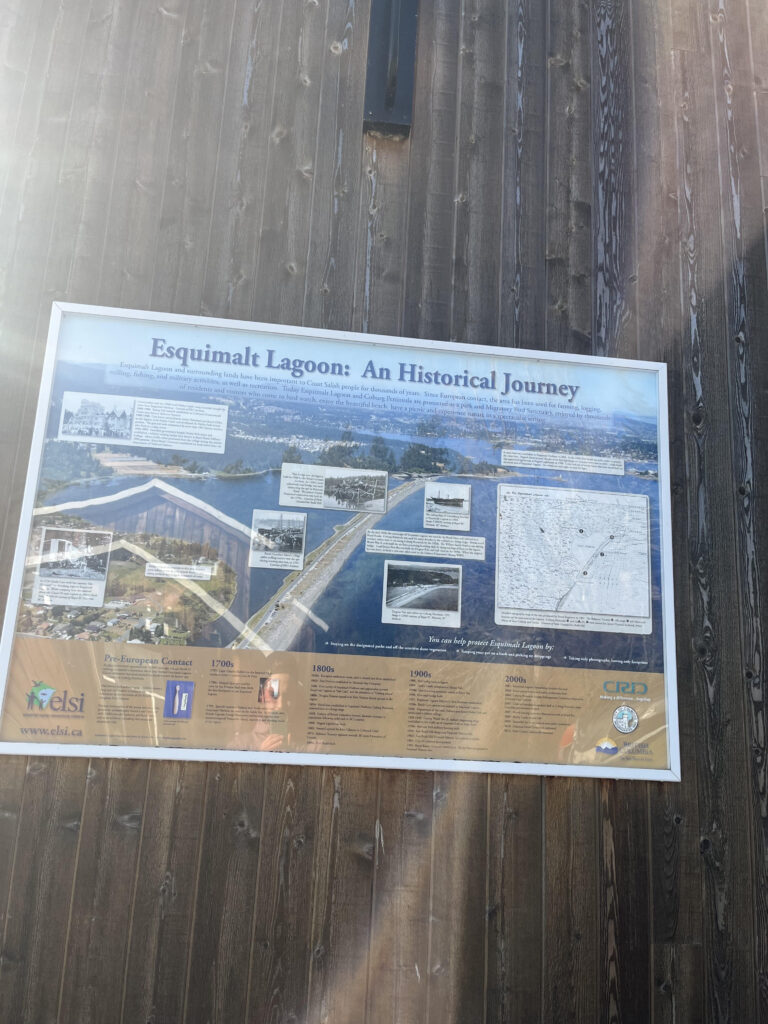
The settler history of Esquimalt lagoon consists of it’s development beginning in 1854 as a naval base and after increased settlement in 1858 due to a gold rush which led to farms and other industries being present in it’s current location (CRD, 2026). In 1902, James Dunsmuir who resided at nearby now Hatley Castle on current RRU property bought and owned the land near the lagoon until it was purchased and acquired the government in 1940 (CRD, 2026). During this time after 1940, the lagoon served a similar to purpose as to that of the Royal Roads Military College where it served as a training ground, but as well suffered detrimental consequences due to a firing range being present, logging, and dumping of waste from the military college (CRD, 2026). More history can be found here on the Esquimalt Lagoon and it’s history.
Current day, the lagoon serves as a natural migratory bird sanctuary that is managed by the Canadian Wildlife Service (CRD, 2026). It is a recreation site where visitors can enjoy the site, however, pets must be on leash due to the bird and wildlife presence there (CRD, 2026). The current site faces challenges of it’s longevity due to environmental and erosion impacts related to climate change (CRD, 2026).
References:
CRD (2026). Esquimalt Lagoon. https://www.crd.ca/environment/stormwater-watersheds-harbours/harbours/esquimalt-lagoon